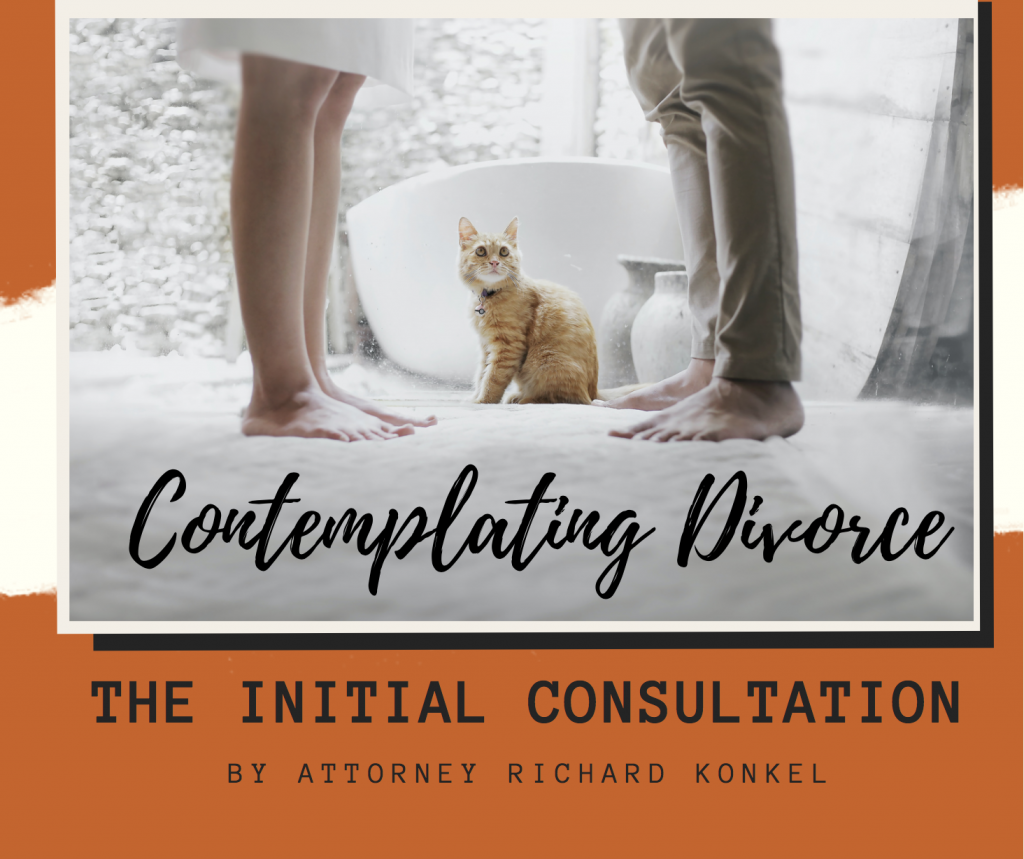
Making the initial consultation
Many people predict that the aftereffect of the pandemic will be a baby boom, an increase in divorces, or a combination of the two. Typically there is an increase in the number of divorces after summer break or the holidays because these are periods of time when people spend much time together, which causes them to critically reevaluate their relationships. As people are sheltering at home during COVID-19, many couples are similarly reflecting on their relationships and deciding to make changes.
If contemplating the life-changing events of a divorce, it is wise to seek legal counsel. Your first interaction when calling an attorney’s office will be with a legal assistant who will take information to run a conflict check to make sure the attorney and the law firm can represent you, and then set up an appointment.
For the initial consultation, you may wish to make a list of questions that you have been thinking about. This ensures that these questions are addressed by the attorney during the consultation. You should also have some idea of what assets are in the marital estate and of each individual and what debt the parties may have together or individually. All of this information may not be readily available to you because of who handles these assets, but they can be found through discovery once a divorce has been filed.
An initial consultation is usually an opportunity for you to tell your story about why you are thinking about divorce and what the facts and circumstances are surrounding the situation. Other matters such as child custody and spousal and/or child support often arise if the parties have children or different levels of income. Typically, these consultations are held in person, but during the epidemic all meetings with a CGA family law attorney are being conducted remotely.
Whether you meet in person or virtually, the attorney should carefully listen to the facts of your case and ask additional questions to gain a fuller understanding of your situation. The attorney will then offer advice as to what the best course of action is at this point in time and how that may or may not meet with your wish to proceed. There may be several options, some of which you may not have known about or contemplated before. Questions from the client are always welcome, and it is important that your main questions are addressed so that you are more informed when deciding the next steps.
If you decide to retain counsel, they will discuss an appropriate retainer fee to pay for attorney fees and filing fees with the Courts, and billing practices and expectations. You will have to sign a fee agreement to acknowledge your payments arrangements.
It is important that you and the attorney are able to freely communicate and understand each other. In divorce and family law matters, a good attorney and client relationship will help relieve some of the stress in your life during this difficult time.

Richard Konkel
Attorney
Richard Konkel concentrates his practice in family law, estate planning, and real estate law. Richard most enjoys acting in a “trusted advisor” role, helping his clients reach milestones and navigate life challenges. He credits much of his success in being able to develop strong bonds and providing emotional support during difficult situations. Richard aims to be objective and focused, allowing him to provide valuable legal counsel in very personal matters.
.
CGA’s latest blog posts.
CGA Law Firm President Craig Sharnetzka Selected to Central Penn Business Journal 2025 Power 100 List
CGA Law Firm is proud to announce that President and Shareholder Craig Sharnetzka has been recognized on the 2025 Central Penn Business Journal’s Power 100 List. This distinguished honor celebrates individuals who have made impactful contributions across industries such as law, business, healthcare, government, and nonprofits, driving growth and fostering success throughout Central Pennsylvania. “I…
Attorney Frank H. Countess elected to the York County Agricultural Society Board of Directors
CGA Law Firm is proud to announce the election of Frank H. Countess to the Board of Directors for the York County Agricultural Society. As a dedicated Life Member, Frank has demonstrated his commitment to the York State Fair and its mission to promote agricultural heritage in our community. Frank’s election is a significant milestone,…